
Chandler Family Court Records
Chandler family court records are filed and kept at the Maricopa County Superior Court in Arizona. The city of Chandler does not run its own family court because all divorce, custody, and support cases must go through the county system. If you need to find a family court record in Chandler, you will search through Maricopa County court files. The Chandler Municipal Court handles traffic tickets and minor crimes but has no role in family law. Over 275,000 people live in Chandler, making it one of the largest cities in the Phoenix metro area. Most family law matters filed by Chandler residents go to the Southeast Justice Center in nearby Mesa.
Chandler Family Court Quick Facts
Chandler Family Court Cases at Maricopa County
All family court matters for Chandler go to the Maricopa County Superior Court. This includes divorce filings, legal separation, child custody, child support, and paternity cases. The county system handles every family law case in the Phoenix metro area. There is no city-level family court anywhere in Arizona. Chandler residents must file at the county courthouse or one of its regional centers.
The closest Maricopa County court location to Chandler is the Southeast Justice Center at 222 E Javelina Ave in Mesa. This facility is about 10 miles from downtown Chandler and serves the east valley. You can file new family court cases here, attend hearings, and pick up copies of court records. The office is open Monday through Friday from 8:00 AM to 5:00 PM. Staff at the front counter can help you find forms and explain basic filing steps. They cannot give legal advice about what to put in your paperwork.
The main Maricopa County Clerk of Superior Court office is at 620 West Jackson Street in Phoenix. This is the central hub for all court records in the county. If you need older files or want to do a deep search for records, the Phoenix location has the most complete archives. You can reach the clerk office by phone at (602) 372-5375. Copy fees are $0.50 per page for plain copies. Certified copies cost an extra $35.00 per document.
Chandler Municipal Court Information
The Chandler Municipal Court handles traffic tickets, misdemeanor crimes, and protective orders. It does not hear any family court cases. If someone tells you to go to the Chandler city court for a divorce or custody matter, that is wrong. You must go to Maricopa County instead. The municipal court has limited powers under Arizona law and family cases are not part of what it can do.
The Chandler Municipal Court is at 200 E. Chicago St. in Chandler, Arizona 85225. You can call them at 480-782-4700 or email court@chandleraz.gov. Office hours run Monday through Friday from 8:00 AM to 5:00 PM. On Wednesdays, they close at 4:30 PM. The court website has links to AZCourtHelp for people who need help finding the right court for their case.
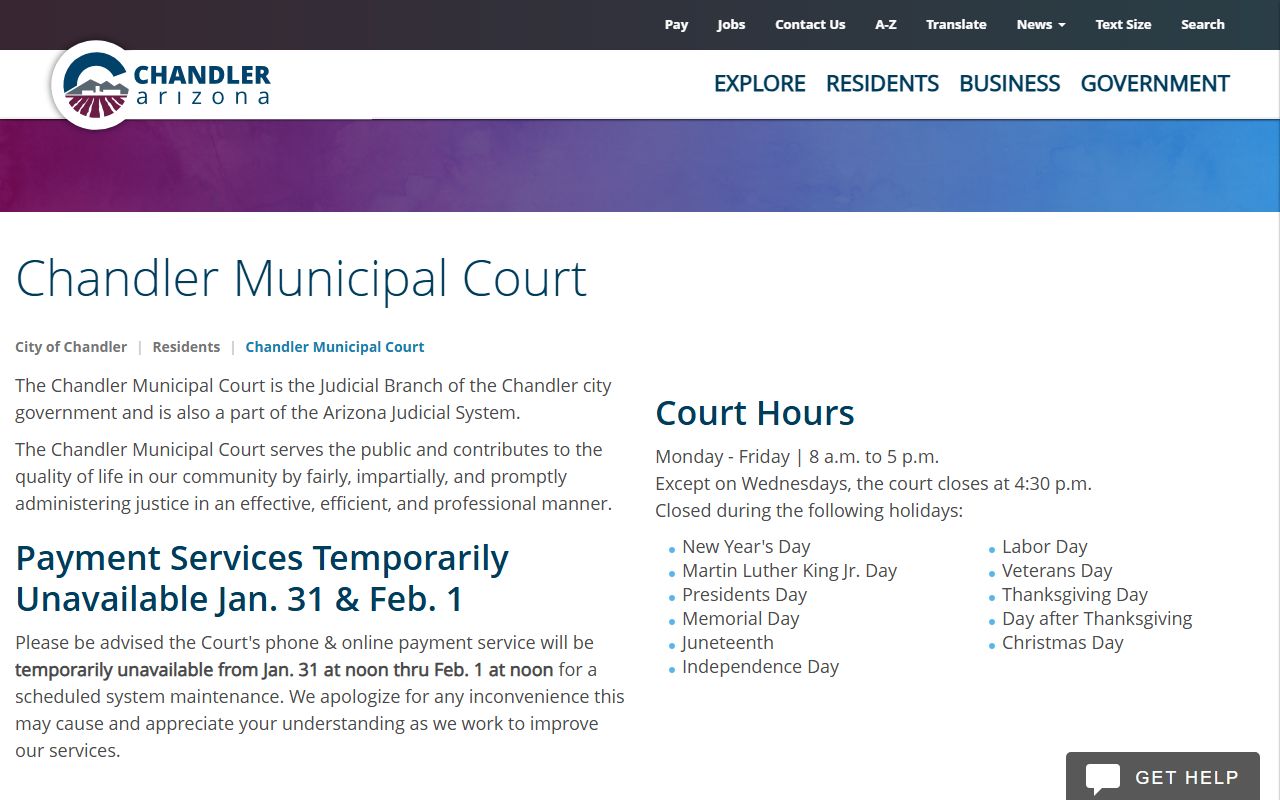
The municipal court staff can point you in the right direction if you come there by mistake. They know that many people confuse city courts with county courts. Family law is one of the most common areas of confusion. The Chandler court website makes clear that it handles only traffic and criminal matters, not civil cases like divorce or custody.
Note: Protective orders are one exception where city courts have some role, but the full family case still goes to county court.
Search Chandler Family Court Records Online
You can search for Chandler family court cases through the Maricopa County Family Court Case Search tool. This free online system lets you look up cases by party name or case number. Search results show the case type, filing date, and current status. The system covers all family court cases filed in Maricopa County, including those from Chandler residents.
The statewide Arizona Courts Public Access Portal also works for Chandler searches. This portal connects to courts across Arizona, so you can search multiple counties at once if you are not sure where a case was filed. Both tools are free and do not need an account. Some case documents may show up online, while others require a trip to the clerk office or a mail request.
For basic case info like filing dates and party names, the online search works well. If you need actual documents like a divorce decree or custody order, you will likely need to request copies from the clerk. Online records show that a case exists but may not have every paper that was filed. The clerk office can tell you what documents are in the file and how to get copies.
Chandler Court Customer Service
While the Chandler Municipal Court cannot help with family cases, their customer service team can direct you to the right place. They deal with this question often. Many Chandler residents assume the city court handles all legal matters, but that is not how Arizona works. The staff is used to explaining that family law goes to county court.
If you need help with your family court case and cannot afford a lawyer, AZ Court Help offers free resources. This website has guides, forms, and videos about family law in Arizona. It explains court procedures in plain language and walks you through common tasks step by step. The site also has a court finder tool that shows you where to file and who to contact. Many Chandler residents use this site when they represent themselves in family court.
Filing Family Court Cases in Chandler
To file a family court case as a Chandler resident, go to one of the four Maricopa County court locations. The Southeast Justice Center in Mesa is closest to Chandler. Bring your completed forms, any required attachments, and payment for the filing fee. Divorce cases cost $376.00 to file. Paternity cases cost $371.00. Legal decision-making petitions cost $306.00.
Fee waivers are available if you cannot afford the filing cost. You must fill out an application showing your income and expenses. The judge reviews your request and decides if you qualify. Forms for fee waivers are at the Law Library Resource Center. This resource center also has free classes and webinars about family law topics. Staff can show you where to find forms but cannot fill them out for you or tell you what to write.
You can also file family court documents online through the court's e-filing system. Attorneys must e-file all documents. Self-represented parties can choose to file in person or online. The e-filing system accepts most family court forms and lets you pay fees with a credit card. Check the court website for instructions on how to set up an account and submit your papers electronically.
Note: The court does not accept filings by fax or regular email; you must use the official e-file system or come in person.
Types of Chandler Family Court Records
Divorce records are the most common type of family court file that Chandler residents search for. A divorce file includes the original petition, the other spouse's response, financial disclosures, settlement agreements, and the final decree. The decree is the court order that ends the marriage. It states terms for property division, debt allocation, spousal maintenance, and child issues if kids are involved.
Child custody records in Arizona use the terms legal decision-making and parenting time. Legal decision-making covers which parent makes big choices about the child's schooling, health care, and religious upbringing. Parenting time sets the schedule for when each parent has the child. These files include parenting plans, custody evaluations, and any orders the judge has signed. If either parent goes back to court to change the arrangement, those modification papers also go in the record.
Child support records show the payment amount ordered and any enforcement actions taken. The Arizona Division of Child Support Services works with the court to establish and collect support payments. You can reach them at 602-252-4045 or toll-free at 1-800-882-4151. Support orders include calculations based on both parents' income using Arizona's child support guidelines. Changes happen when circumstances shift, like a job loss or a raise.
Paternity records establish who the legal father is. These files may include DNA test results, acknowledgments of paternity signed by both parents, or court orders declaring paternity. Once a father is legally established, the court can set support amounts and create custody schedules. Many paternity cases also involve custody and support issues all in one filing.
Chandler Family Court Fees
Chandler residents pay the same family court fees as everyone else in Maricopa County. The Maricopa County filing fee schedule applies to all family law matters. These fees increased in late 2024, so older information you find online may be out of date.
Current filing fees for family court cases include:
- Petition for Dissolution of Marriage: $376.00
- Summary Consent Decree: $331.50
- Response to Dissolution: $287.00
- Legal Decision-Making Petition: $306.00
- Paternity or Maternity: $371.00
- Order of Protection: No cost
Getting copies of records has separate fees. Plain copies cost $0.50 per page. Certified copies add $35.00 per document on top of the page fee. If staff must search for records because you do not have a case number, there is a research fee of $35.00 per year searched. Mail requests add $8.00 for postage and handling. You can pay by cash, check, or credit card in person. Mail payments should be check or money order only.
Legal Help for Chandler Residents
Many Chandler residents handle their own family court cases without a lawyer. The court calls this being self-represented or pro se. If you go this route, the Law Library Resource Center is your best friend. They offer live workshops and webinars on family law topics. Recorded videos are online if you miss a live session. Self-help guides walk you through common tasks like filling out divorce forms or asking to modify a custody order.
The Law Library staff can help you find forms and explain procedures. They cannot give you legal advice. That means they cannot tell you which forms to use for your situation or what answers to write in the blanks. If you need actual legal advice, you need to talk to an attorney. Community Legal Services and other legal aid groups serve low-income Arizonans. Call the clerk office at (602) 506-7353 to ask about referral resources.
Arizona law under Title 25 of the Arizona Revised Statutes covers family law matters. This includes marriage, divorce, custody, support, and paternity. The statutes spell out residency requirements, waiting periods, and procedures for different case types. Reading the actual law can help you understand what the court can and cannot do. Most family court forms reference specific statute sections so you know which rules apply.
Family Court for Nearby Cities
Other cities near Chandler also use the Maricopa County Superior Court for family law matters. If you moved to Chandler from one of these cities, any existing family court case stays in the county where it was filed. You do not automatically transfer a case just because you changed addresses. Talk to the clerk if you need to figure out where an old case is located.
Gilbert is east of Chandler and has a similar situation. Tempe is north. Mesa borders Chandler and has a Maricopa County regional court center that many Chandler residents use. Phoenix and Scottsdale are also in Maricopa County. All these cities send their family court cases to the same county court system.
Maricopa County Family Court
For complete information about family court services, fees, forms, and procedures, visit the Maricopa County family court records page. That page has details about all four regional court locations, the online case search system, and resources for self-represented parties. Maricopa County is the largest county in Arizona by population and handles more family court cases than any other county in the state.
The Maricopa County Family Department has judges who hear only family law cases. This helps cases move faster than in smaller counties where judges handle many different types of cases. The department also offers conciliation services for families trying to work out disputes without a full court battle. Mediation and other alternative dispute resolution options can save time and money compared to going to trial.