
Find Coconino County Family Court Records
Coconino County family court records are held at the Superior Court in Flagstaff. These public files include divorce decrees, child custody orders, support judgments, and paternity cases. The Clerk of Superior Court at 200 N San Francisco St. maintains these documents for anyone who needs them. You can request copies in person, by mail, or through online services. Family law matters in Coconino County follow Arizona state rules, but the local court has its own procedures and forms. Residents of Flagstaff and the surrounding areas file their cases here. The court serves one of the largest counties by land area in the entire country.
Coconino County Family Court Quick Facts
Coconino County Clerk of Superior Court
The Coconino County Clerk of Superior Court is the main source for family court records in this area. The office is at 200 N San Francisco St. in Flagstaff, Arizona 86001. You can call them at 928-679-7600 for help with your request. Hours are Monday through Friday from 8:00 AM to 5:00 PM. The office closes on state holidays and weekends. Staff can help you find the case you need and explain what documents are part of the file.
Copy fees at this court are $0.50 per page. This is the same rate used by most Arizona courts. If you want a certified copy with the court seal, ask about that fee when you call. Certified copies prove that a document is real and comes from the court. Banks, employers, and other agencies often want certified copies for their records. Plan to pay more for certification than for plain copies.
You can view the official clerk services page for details on Coconino County court records. The screenshot below shows the main clerk office page where you can find contact info and hours.
The clerk office staff can answer basic questions. They cannot give legal advice about your case. For legal help, contact an attorney or reach out to the law library.
Coconino County Superior Court Family Cases
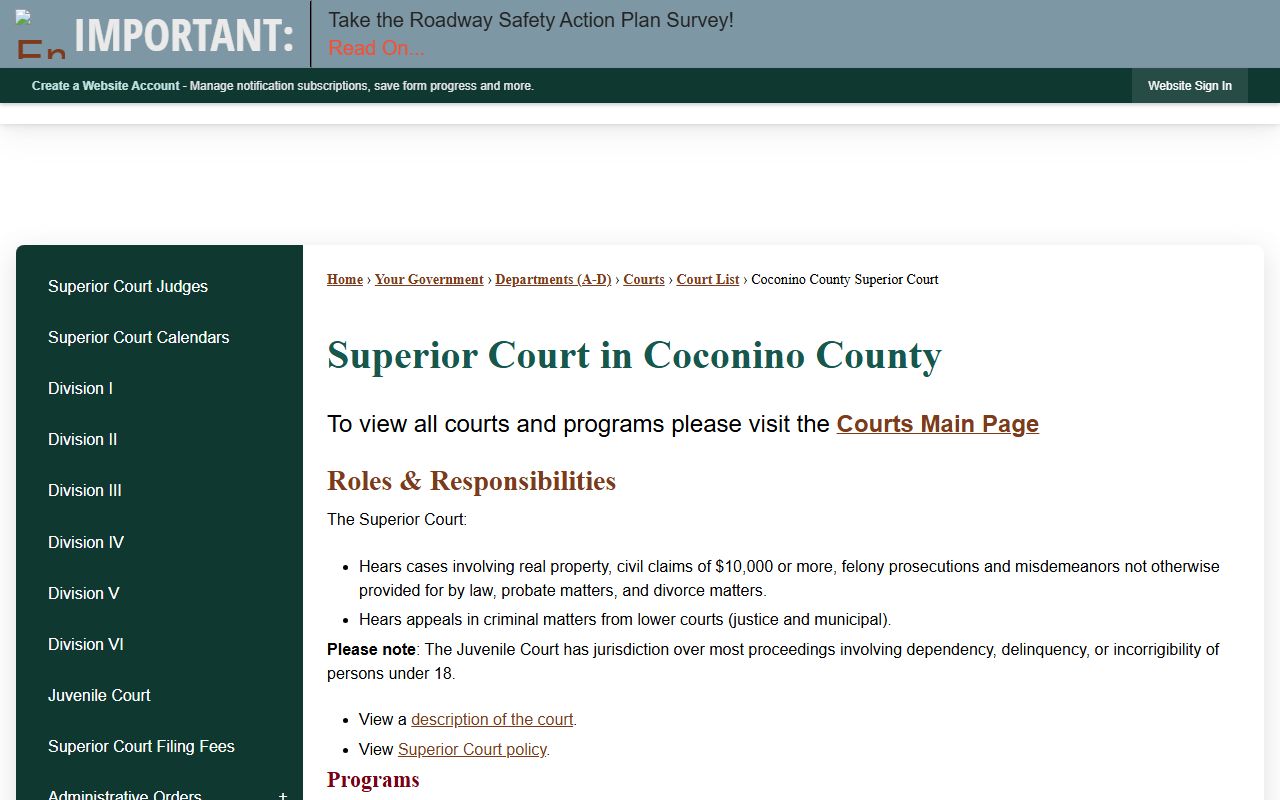
The Coconino County Superior Court handles all family law matters in this county. This includes divorce, legal separation, child custody, child support, paternity, and spousal maintenance. Judges hear these cases and issue orders that become part of the court record. The court follows Arizona family law rules set out in Arizona Revised Statutes Title 25, which covers marital and domestic relations.
Family cases start when someone files a petition with the clerk. The petition explains what the person wants from the court. In a divorce case, the petition asks the court to end the marriage. In a custody case, it asks for legal decision-making and parenting time orders. The other party then has a chance to respond. Both sides share information about finances and the children. If they agree, they can submit a settlement. If not, a judge will decide after a hearing or trial.
The court keeps all filed papers in the case record. This includes the petition, the response, financial forms, parenting plans, and the final decree or order. Most of these papers are public. Some documents are sealed by law. Juvenile records and certain financial details may not be open to public view. Ask the clerk if you have questions about what you can see.
Note: Coconino County is the second largest county in the United States by land area, but most family court cases are filed in Flagstaff.
eFiling for Coconino County Family Court
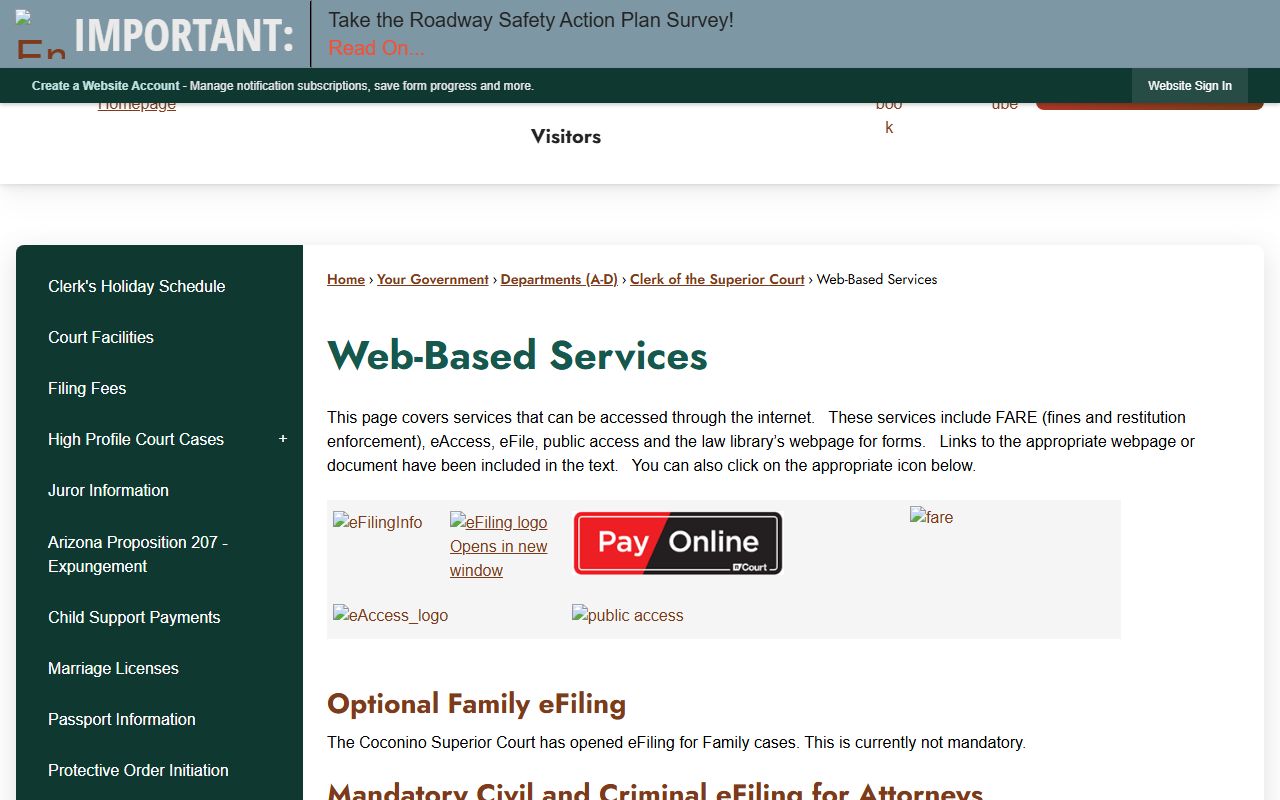
Coconino County Superior Court now offers eFiling for family cases. This is an online system that lets you file court papers from your home or office. You do not have to drive to the courthouse to submit documents. The Web-Based Services page has more details about how to use this system. As of now, eFiling is open but not required. You can still file in person if you prefer that method.
eFiling works best if you have a computer and internet access. You create an account, fill out your forms, upload them, and pay the filing fee online. The system sends your papers to the clerk office right away. You get a confirmation when they accept your filing. This saves time compared to mailing documents or waiting in line at the courthouse. It also gives you a record of when you filed, which can matter for deadlines.
Some people still prefer to file in person. The clerk can check your forms right there and tell you if something is missing. This can prevent delays from rejected filings. If you are new to the court system, an in-person visit may help you feel more confident. Both methods work fine for family court cases in Coconino County.
Coconino County Law Library
The Coconino County Law Library helps people who are handling their own family court cases. You can reach the law library at 928-679-7540. There is also a toll-free number: 877-806-3187. Staff can point you to forms, guides, and resources for divorce, custody, and support matters. They cannot give legal advice, but they can show you where to find what you need.
The library has books and forms on Arizona family law. You can use computers there to fill out court forms. Many forms are also on the AZ Court Help website, which is free to access from anywhere. That site has step-by-step guides for common family court tasks. It explains what each form is for and how to complete it. If you cannot afford a lawyer, start with these self-help resources. They cover most basic situations.
Legal aid groups may also help if you meet income limits. The law library can give you contact info for local legal aid. Some lawyers offer free consultations or reduced fees for simple cases. Do not skip getting help if you feel lost. Family court orders can affect your life for many years.
Types of Coconino County Family Court Records
Divorce records are the most common family court documents people request. A divorce file has the petition, the other party's response, financial affidavits, and the final decree. The decree is the court order that ends the marriage. It spells out how property gets split, whether anyone pays spousal support, and the terms for children if any. Courts often call divorce cases dissolution of marriage in legal papers.
Custody records use Arizona terms like legal decision-making and parenting time. Legal decision-making means who makes big choices for the child. These include school, health care, and religion. Parenting time is the schedule for when each parent has the child. The parenting plan is a key document in these cases. It sets the rules both parents must follow. If someone wants to change the plan later, they file a modification request. That becomes part of the record too.
Child support records show how much one parent must pay the other for the child's care. The court uses a formula based on both parents' income and the child's needs. The Arizona Division of Child Support Services helps enforce these orders. Support orders can be modified if there is a big change in circumstances. The file will show the original order and any changes over time.
Paternity records prove who the legal father of a child is. These cases happen when the parents are not married. The file may have DNA test results, voluntary acknowledgment forms, or a court order declaring paternity. Once paternity is set, the court can then order support and custody arrangements.
Accessing Coconino County Court Records
Most family court records in Coconino County are public. Anyone can ask to see them. You do not have to explain why you want the records. The clerk will give you copies if you pay the fee. Public records include divorce decrees, custody orders, and support judgments. Court access rules come from Arizona Supreme Court Rule 123, not the general public records law.
Some records are sealed or restricted. Juvenile cases are not open to the public. Adoption files are confidential under Arizona Revised Statutes Title 8. Certain financial documents may be kept private. Protection order details sometimes have parts redacted for safety. If you ask for records and some are not available, the clerk will tell you which ones you cannot get and why.
The statewide Arizona Courts Public Access Portal covers many courts, including Coconino County. You can search by name or case number. Basic case info shows up online. Full documents may require a trip to the clerk office or a paid request. Online search is free. Use it to find case numbers before asking for paper copies.
How to Request Coconino County Family Records
You have three main ways to get Coconino County family court records. You can visit the clerk office in person, send a request by mail, or use online tools. Each method has pros and cons. Pick the one that works best for your situation and timeline.
In-person requests are the fastest option. Go to 200 N San Francisco St. in Flagstaff during office hours. Tell the clerk what case you need. They will look it up and make copies while you wait. Bring cash or a card to pay the copy fee. You can also review the file in person without paying if you just want to read it. Only copies cost money.
To request records by mail, write a letter with the case name, case number if you have it, and what documents you need. Include a check or money order for the copy fees. Make it payable to Coconino County Clerk of Superior Court. Mail your request to:
- Coconino County Clerk of Superior Court
- 200 N San Francisco St.
- Flagstaff, AZ 86001
Mail requests take longer than in-person visits. Allow one to two weeks for processing and mailing. Call ahead if you are not sure how much the fee will be. The clerk can estimate the cost based on the number of pages in the file.
Coconino County Family Court Fees
Copy fees in Coconino County are $0.50 per page. This applies to plain copies without any special markings. If you need a certified copy, the fee is higher. Certified copies have the court seal and prove the document is authentic. Banks and other agencies often require certified copies for official purposes. Call 928-679-7600 to ask about current certification fees before you order.
Filing fees for new family court cases follow the statewide schedule. As of late 2024, Class A filings cost $330 and Class B filings cost $165. Divorce petitions fall into one of these classes depending on the case type. Response fees and other filings have their own costs. The Arizona Courts Fee Schedule has the full list of fees. These amounts can change, so check before you file.
Fee waivers exist for people who cannot afford court costs. You fill out a form that shows your income and expenses. The judge reviews it and decides if you qualify. If approved, you can file your case without paying fees upfront. Forms for fee waivers are at the clerk office and on the AZ Court Help website.
Cities in Coconino County
Coconino County includes Flagstaff and several smaller towns. All family court cases for these areas go through the Coconino County Superior Court in Flagstaff. There is no city-level family court. Residents of Page, Williams, Sedona (partly), and other communities file their divorce, custody, and support cases at the county level.
Flagstaff is the county seat and largest city. It is home to Northern Arizona University and sits at over 7,000 feet elevation. Most of the county's family court filings come from Flagstaff residents. If you live in a smaller town within Coconino County, your case still goes through the Flagstaff courthouse.
Nearby Arizona Counties
Coconino County shares borders with several other counties. If you are not sure where a case was filed, check these neighboring counties. Family court records stay in the county where the case started, not where you live now. Cases do not transfer just because you moved.